
Digitalisation in building services: insights from the suissetec conference
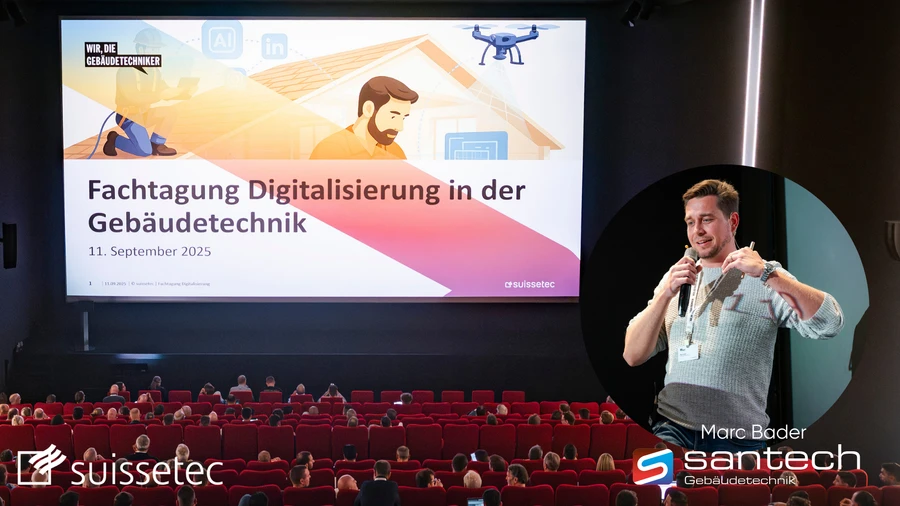
Last week we had the pleasure of attending the conference on digitalisation in building services held by the building services association suissetec at the Kosmos in Zurich. Through interesting talks, in a relaxed cinema atmosphere complete with popcorn, we gained wide-ranging insights into the digitalisation possibilities in the various areas of building services. From digital sales through planning with the help of simulation to the use of VR technology in training, a broad range of topics was on offer.
Digital sales and automated pricing
With regard to digitalisation possibilities in sales, we found the focus on consultations that can largely be carried out from home particularly exciting, in a first step even with algorithm-based automatic pricing. Using a configurator, individual product combinations, for example as part of a bathroom renovation, can be put together and the approximate costs determined immediately and from anywhere.
Simulation in digital planning
Also of great interest to us was what possibilities simulation offers in digital planning. Different options can be compared against selected criteria in order to find the most effective variant or to optimise the existing one accordingly. And last but not least, we were impressed by the use of virtual reality in building services training.
Virtual reality in training
Using pipe pressing and bitumen welding as examples, it was demonstrated what potential VR technology brings to training: from resource consumption and material costs, through the risk of injury, to educational benefits, for example through unlimited repetition or the ability to pinpoint at which point the execution was still faulty.
Digitalisation at suissetec: Lars Kunath and Stefan Wüst in interview
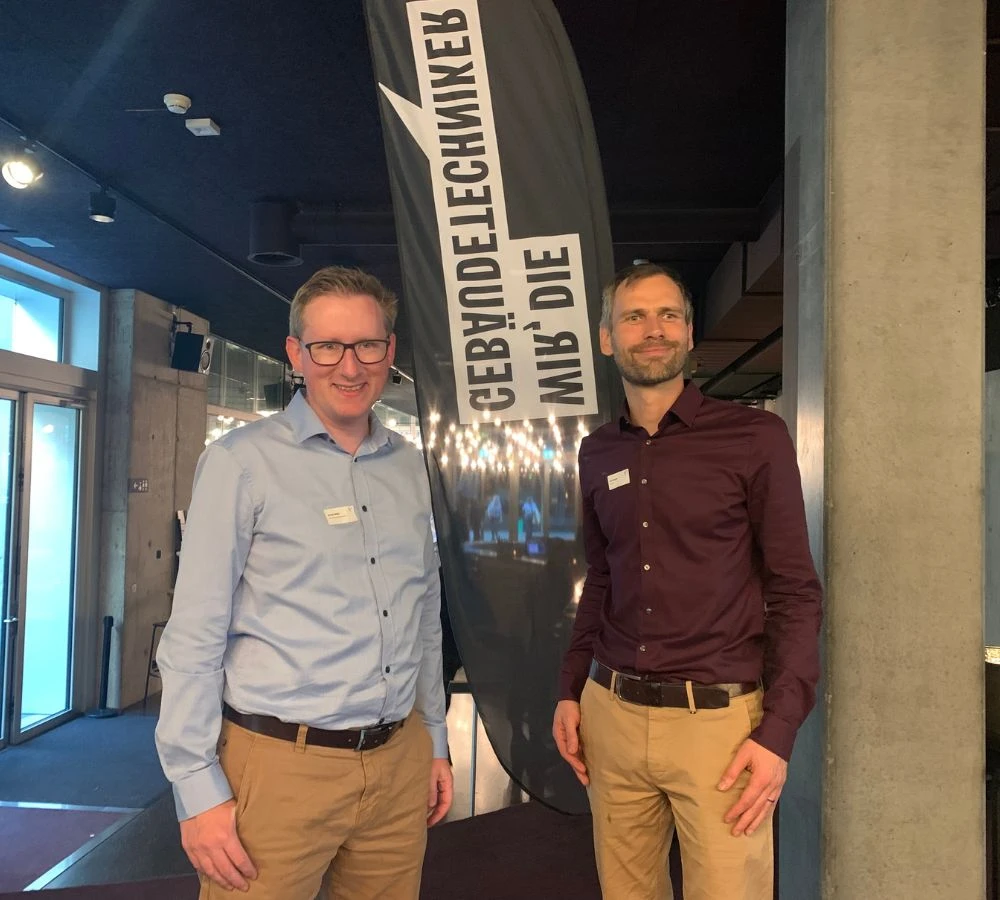
After this afternoon full of input, we had the opportunity to ask Lars Kunath, responsible for digital solutions in building services at suissetec, and Stefan Wüst, member of the central board, a few questions about the day's event over a generous aperitif.
We were primarily interested in how digitalisation is implemented and promoted at suissetec.
We heard that today's conference on digitalisation is a premiere, the first event on the topic of digitalisation. What role does digitalisation play for suissetec?
Lars Kunath explains:
Digitalisation plays a very big role for suissetec. There are various megatrends, such as the shortage of skilled workers or material shortages, where no easing is in sight, but for which digitalisation offers a possible solution. That is why our goal is to take away our partners' fear of digitalisation. We want to show how and where each individual company can play its part. We particularly want to show smaller companies ways and means of becoming more effective. Today's conference should also be seen in this context: for once we wanted to step out of the digital world and have a personal meeting. Above all, the message we wanted to get across today is that it doesn't have to be giant steps towards digitalisation; the main thing is to start somewhere.
Stefan Wüst adds:
Two years ago a dedicated staff unit for digitalisation was set up at suissetec, to focus specifically on it and to reflect the importance of this topic. On the one hand suissetec offers products, but on the other our task is also to change the mindset of our members and, as an association, to offer exciting solutions in order to stay current and interesting.
Both tell us about the concrete reason for the event:
We are gradually gaining the strength to run something like this. Despite our activity on social media, our members often do not know everything we do and offer in terms of digitalisation. Our first idea for today's conference was actually to invite companies that are not yet so well positioned digitally. But the companies that registered were very advanced digitally, so we changed the concept to present them more as role models. We want to set off a whole avalanche and really get things moving. This event was, so to speak, the test run, and we met with great interest, which pleased us very much.
Finally, we were interested in which area of building services the two experts see the greatest need to catch up on digitalisation processes.
Lars and Stefan explain:
In our opinion the greatest need to catch up lies in working methods on the construction site. On the one hand that concerns the way work is done on site; there you often do not get the feeling that digitalisation has arrived yet. On the other hand there is a lot of idle time, waiting time and therefore inefficiency; that concerns more the planning side, such as resource planning and costing. In both areas I see clear potential for digitalisation.
We are very pleased to have been able to attend this varied event and would especially like to thank Lars Kunath and Stefan Wüst for the interview afterwards.